

Adelaide
Adelaide Strikers
Adelaide's consistent champions, chasing back-to-back titles once more.
2 titlesKaren Rolton Oval
Team profile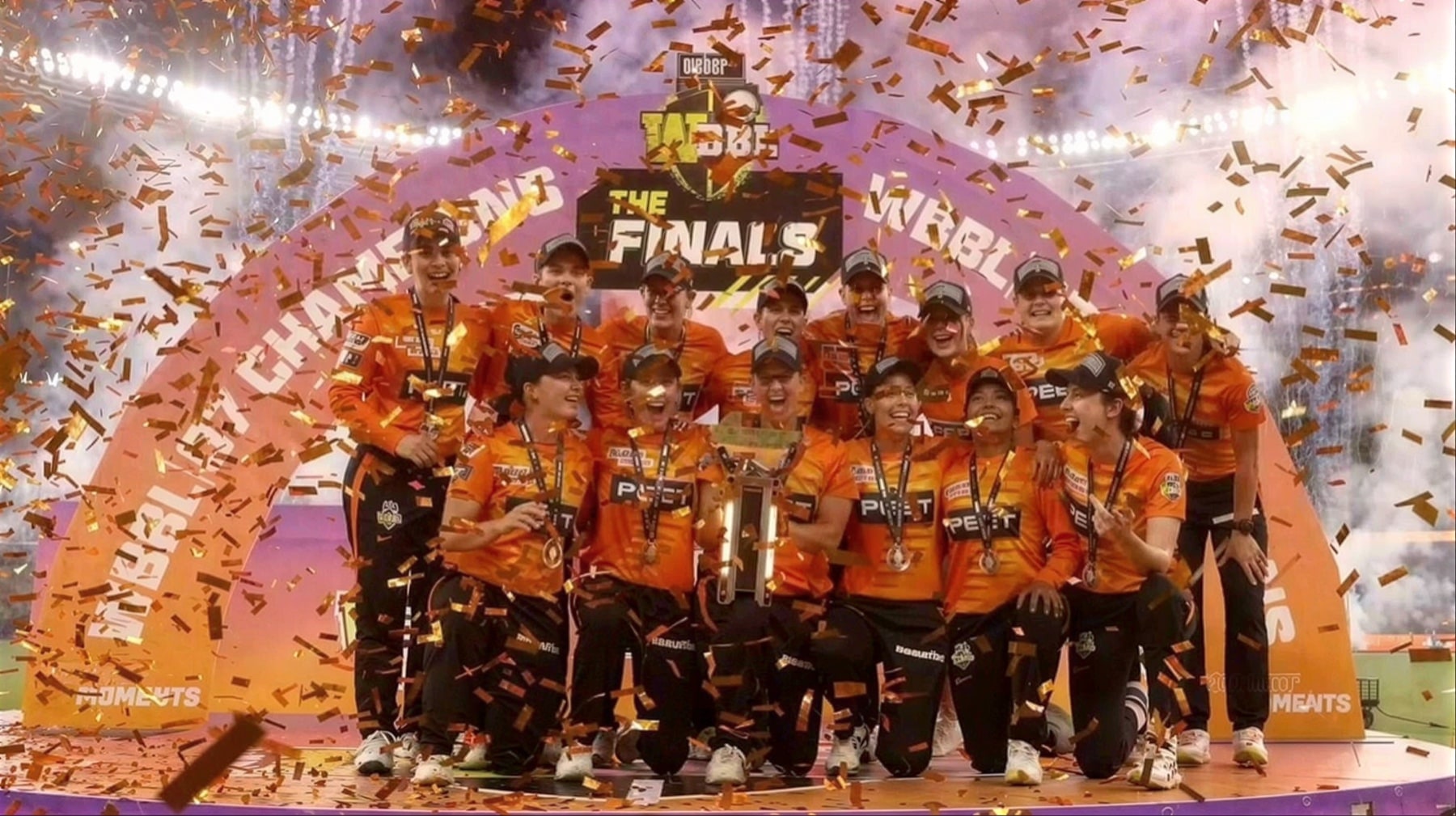
WBBL|12: 29 Oct, 5 Dec 2026
Your gateway to the official IDs for Australia's premier women's T20 competition, celebrating the skill, speed and spirit of the game.
Teams
Matches
Days
Champion
Next up
AEDT
Melbourne Renegades v Sydney Thunder
CitiPower Centre, Melbourne
--
Days
--
Hrs
--
Min
--
Sec
Champions
00 · The season
The Women's Big Bash League returns for its twelfth season with everything that makes it essential viewing already turned up to eleven. WBBL|12 kicks off on 29 October 2026 with a double-header at the CitiPower Centre in Melbourne, setting the tone for a competition that thrives on pace, intensity and unpredictability. With 43 matches packed into just 38 days, every run, wicket and catch carries amplified consequence. This isn't a tournament that allows teams time to find their rhythm, from the first ball of the opening clash between the Renegades and Thunder, every side must be sharp, adaptable and ready to fight for survival in a format that rewards consistency and punishes hesitation.
The compressed schedule means recovery windows are tight, travel demands are relentless, and squad depth will be tested like never before. With only eight teams cycling through a double round-robin before the top four enter the three-match finals series, there's no room for slow starts or mid-season lulls. Every match is a statement, and momentum swings can turn a team's campaign around in a single weekend. The structure rewards resilience, and this year's Knockout, Challenger and Final, all hosted by the higher-ranked side, adds another layer of stakes to every result in the league stage.
Playing conditions are shaped by the eight intimate suburban grounds chosen for the season, from the Ninja Stadium in Hobart to the WACA Ground in Perth, and from North Sydney Oval to the Karen Rolton Oval in Adelaide. These are not neutral backdrops; each ground has its own character, its own dimensions and its own influence on how batters and bowlers approach the game. The smaller boundaries reward aggressive strokeplay, while the tighter outfields demand precision in the field. The absence of the largest international stadiums keeps the focus where it belongs: on skill, execution and the drama of close contests under lights and in the afternoon sun.
This site is your access point to the full scope of WBBL|12, not as a tipster or predictor, but as a place for informed followers to stay across fixtures, dive into tactical analysis, understand the evolving player markets, and explore how each ground shapes the contest. Whether you're tracking your favourite team's finals pathway or learning how spinners adapt to Drummoyne Oval's slow surface, we offer context, not noise. For those new to the league, our account desk helps set up verified access to official updates and digital content, ensuring you're connected without the clutter. This is cricket played at the highest level, by professionals who command attention on their own terms, and we're here to follow it properly.
The WBBL features eight city-based teams battling across a double round-robin format before the top four progress to a three-match finals series for glory.
Adelaide
Adelaide's consistent champions, chasing back-to-back titles once more.
Brisbane
Brisbane Heat: back-to-back champions aiming to reclaim glory at Allan Border Field.
Hobart
Hobart Hurricanes, defending champions from Ninja Stadium, aiming to repeat.
Melbourne
Melbourne Renegades: defending past glory, chasing redemption at home.
Melbourne
Melbourne Stars, chasing first title at suburban Melbourne home.
Perth
Perth Scorchers: hard-hitting challengers from the WACA, chasing redemption.
Sydney
Sydney Sixers: Two-time champions chasing redemption at North Sydney Oval.
Sydney
Sydney Thunder: pioneers with power, chasing glory at Drummoyne Oval.
Scroll the rail. Franchise colourways only, no logos or marks are reproduced.
WBBL|12 begins 29 October with a Melbourne double-header at CitiPower Centre, followed by 40 league matches before the Knockout, Challenger and Final decide the champion.
Opening rounds
All times AEDT
Thu, 29 Oct
15:40 AEDT
Melbourne Renegades v Sydney Thunder
CitiPower Centre, Melbourne
Thu, 29 Oct
19:10 AEDT
Melbourne Stars v Hobart Hurricanes
CitiPower Centre, Melbourne
Fri, 30 Oct
19:10 AEDT
Brisbane Heat v Sydney Sixers
Allan Border Field, Brisbane
Sat, 31 Oct
15:40 AEDT
Adelaide Strikers v Melbourne Stars
Karen Rolton Oval, Adelaide
Sat, 31 Oct
19:10 AEDT
Perth Scorchers v Melbourne Renegades
WACA Ground, Perth
Sun, 1 Nov
15:40 AEDT
Sydney Thunder v Brisbane Heat
Drummoyne Oval, Sydney
Sun, 1 Nov
19:10 AEDT
Sydney Sixers v Hobart Hurricanes
Drummoyne Oval, Sydney
Mon, 2 Nov
19:10 AEDT
Melbourne Stars v Perth Scorchers
CitiPower Centre, Melbourne
Showing the opening rounds of 43 scheduled matches. Fixtures and start times are as published by Cricket Australia and can change.
Season shape
Finals series
All times AEDT
Tue, 1 Dec
19:10 AEDT
Knockout Final
Home of the third-placed side
Thu, 3 Dec
19:10 AEDT
Challenger Final
Home of the second-placed side
Sat, 5 Dec
19:10 AEDT
WBBL|12 Final
Home of the higher-ranked finalist
Finals venues are set once the ladder is final. Fixtures and start times are as published by Cricket Australia and can change.
Elite batters, finishers, spin tacticians and death bowlers bring specialist skills that can shift momentum in seconds, making every player a potential game-changer in the WBBL.
The powerplay opener in the WBBL is a high-wire act, tasked with dismantling new-ball attacks during the first six overs when fielding restrictions amplify scoring opportunities. These batters must combine aggression with precision, targeting gaps before field placements tighten. In a competition defined by tight margins and small, lively grounds, a strong powerplay sets the tone for the innings, often deciding the eventual run chase or target. Success demands rapid decision-making under pressure, rotating strike, clearing boundaries, and reading bowlers instantly. The difficulty lies in balancing risk and control; one misjudged shot can shift momentum. With matches often won or lost in the first third of an innings, the opener's ability to dominate the powerplay is a silent architect of victory.
Read moreShow lessWatch for
How markets read it
Betting markets often mis-price "The Powerplay Opener" in the WBBL due to overreaction to recent form and underestimation of anchor batters in unfamiliar roles. The compact grounds amplify randomness, making early boundaries volatile. Markets struggle to price consistency for openers facing varied bowling attacks across eight suburban venues, creating misalignments between perceived dominance and actual performance probability.
The anchor in WBBL cricket stabilises the innings during the middle overs, typically batting through phases seven to fifteen. With fielding restrictions easing and spinners coming on, the role demands sharp risk assessment, preserving wickets while subtly accelerating. In a competition where run chases often hinge on composure after early strikes, the anchor ensures the team doesn't collapse under pressure. Grounds like Ninja Stadium and Drummoyne Oval offer little margin for error, making shot selection critical. The challenge lies in balancing patience with scoring, rotating strike without resorting to rash strokes. Success isn't measured in boundaries but in control, knowing when to deny the bowler, when to nudge, and how to shield a strike-hungry partner. It's a quiet leadership role that often shapes the game's outcome without headlines.
Read moreShow lessWatch for
How markets read it
Betting markets often mis-price "The anchor" in the WBBL due to overreaction to recent form, undervaluing consistency. Anchors with steady strike rates and high intent in death overs can appear less flashy early, skewing odds. Markets use recency bias, a pricing concept where latest performance outweighs long-term patterns, leading to inflated prices on big names after quiet games, while reliable performers are overlooked despite stable roles.
The finisher in WBBL cricket is a specialist batter who arrives in the final five overs with the game often balanced on a knife-edge. Tasked with maximising runs between overs 16 and 20, this player must accelerate under pressure, turning competitive totals into imposing ones or chasing down tough targets with composure. The compact suburban grounds mean boundaries are reachable, but the condensed schedule and high-stakes environment amplify pressure. With only eight teams and a short tournament window, every match carries weight, making the finisher's role pivotal. They need not just power, but precision, reading spin, manipulating the field, and recalibrating in real time. The role is hard because failure is magnified: one misjudged shot or poor tactical call can shift momentum irreversibly in a league where margins are razor-thin.
Read moreShow lessWatch for
How markets read it
Betting markets often mis-price "The finisher" in the WBBL due to overreaction to recent six-hitting cameos. Odds lean on narrative, not context, small grounds inflate late powerplay strike rates. A player's perceived finishing skill gets priced without factoring team batting order stability or death-over match-ups, creating disconnects between probability and actual performance patterns in the league's condensed format.
The new-ball seamer in the WBBL is a linchpin of the fast-bowling attack, tasked with executing precision in the high-pressure powerplay overs and the tense death stages. Operating in overs 1 to 6, they exploit the harder ball and fielding restrictions, aiming to dismantle top orders with swing and seam. In the final few overs, they return to defend totals, relying on composure and variation under scoreboard pressure. This dual responsibility makes the role pivotal, early wickets can derail a chase, while disciplined death spells can strangle momentum. The compact suburban grounds amplify the challenge, where even slight errors are punished. Success demands not just pace or swing, but the temperament to thrive in front of passionate crowds and deliver when matches pivot.
Read moreShow lessWatch for
How markets read it
Betting markets often overreact to recent wicket-taking performances, inflating odds for new-ball seamers after standout spells. This recency bias overlooks pitch-specific conditions and team batting depth, leading to mispriced markets. Short-format volatility means even elite seamers face inconsistent returns, skewing perceived reliability. The pricing fails to fully account for how suburban grounds influence ball behaviour early in the innings.
The wrist spinner in the WBBL dominates the middle overs, a quiet assassin between overs 7 and 16 when the game's rhythm slows but the stakes rise. Tasked with strangling scoring and prising out key batters, this role exploits smaller grounds where turn and guile can disrupt aggressive intent. In a league where every run is magnified and death bowlers loom, stopping the flood here sets up the finish. The pressure lies in containment without monotony, deceiving batters while avoiding the boundary rope, all under lights where every error is amplified. With only eight venues, conditions repeat, demanding constant reinvention. Success demands not just skill, but nerve to hold a line under siege, making the wrist spinner a silent match-decider in a competition built on precision.
Read moreShow lessWatch for
How markets read it
Betting markets often mis-price wrist spinners in the WBBL due to small sample sizes and outlier performances skewing perception. The "regression to the mean" concept suggests that after an exceptional start, odds may overreact, pricing them as consistently dominant despite variable pitch conditions across the eight compact grounds, where bounce and turn differ sharply, affecting their actual match-up difficulty.
The seam-bowling all-rounder is a match-winner across all three phases of WBBL cricket, offering rare balance in a format where overs are precious and conditions fluctuate. This player bridges gaps, opening the bowling under lights, breaking partnerships in the middle overs, then returning late when pressure mounts. Their ability to bowl tight lines on tricky suburban pitches, especially at grounds like Drummoyne Oval or North Sydney Oval, can strangle scoring and force errors. With the bat, they often anchor the lower order, capable of shifting momentum in the final ten overs. What makes the role so hard is the demand for consistency: bowling accurately under fatigue, adapting to different ground sizes, and delivering with both ball and bat in high-leverage moments, all while facing elite-level competition night after night.
Read moreShow lessWatch for
How markets read it
Betting markets often undervalue the consistency of seam-bowling all-rounders in the WBBL due to overemphasis on top-order batters and specialist wicket-takers. Their dual role creates hidden stability, especially on smaller grounds where economy and reliable lower-order runs matter. Markets may misprice this, underestimating how often they influence tight finishes without headline figures.
Scroll the rail, and open any card for what to watch and how the markets read it.
From Ninja Stadium to North Sydney Oval, each of the eight intimate venues shapes play with unique dimensions, pitch behaviour and local conditions that teams must master.
At the CitiPower Centre, captains winning the toss typically back their instincts to bat first under drying afternoon conditions. The square boundaries reward clean striking, but the surface slows through the innings, aiding spinners who can grip and turn. With lights on by the evening game, shadows and cooler air tighten scoring zones, demanding patience. Captains often hold back legspinners for the second powerplay when the ball begins to skid less.
At North Sydney Oval, the short straight boundaries and true bounce reward aggressive batting, especially down the ground. A captain winning the toss often opts to bat, trusting the reliable surface to post or chase totals. The intimate ground amplifies fielding pressure, while the evening lights enhance visibility, smoothing stroke play. Spinners must adapt early as the floodlights take full effect, making timing easier and elevating the tempo of the innings.
Drummoyne Oval's compact dimensions make run chases more inviting, so captains often prefer chasing after winning the toss. The short boundaries favour batters who can rotate strike and find gaps, while bowlers rely on precision and variation. The river breeze can play a role as the evening wears on, and once the lights take full effect, the ball can skid through quicker under the strong floodlights, demanding sharper footwork and cleaner striking.
At Karen Rolton Oval, the short square boundaries and true surface invite aggressive batting, especially against pace, encouraging captains to back their batters if they win the toss. Wrist spinners thrive under lights when the surface offers turn, shifting the balance towards guile and placement. The compact ground rewards clever field settings, and as shadows deepen, the lights amplify the grip, making spin a growing threat through the innings.
At Allan Border Field, the fast outfield and skidding surface reward aggressive batting, especially in the powerplay, making it crucial for captains winning the toss to back their top order. The humid evening conditions sustain pace and carry, favouring batters who clear the infield early. Once the lights take effect, the ball continues to race away, amplifying stroke-making through the middle overs, with fielding teams often resorting to containment over aggression.
At the WACA Ground, captains backing their firepower will eye batting first, trusting the early seam movement amplified by the Fremantle Doctor's afternoon gusts. The pitch rewards pace and aggression, with the ball leaping through the surface. Under lights, the wind often settles, but the bounce remains lively, keeping fast bowlers potent. Batters must adapt quickly, timing thrives early, but lapses in footwork are punished by steep carry. Spinners find little relief under the lights, as the surface offers minimal turn.
At Ninja Stadium in Hobart, the toss-winning captain often chooses to bat first, trusting early control on a seam-friendly surface where the new ball nips under the lights. Pacers thrive in the first six, exploiting movement off the pitch and breeze from the Derwent. The large straight boundaries deter lofted shots, favouring placement. Under lights, the breeze intensifies, making strokeplay erratic and increasing the value of a steady hand.
At Adelaide Oval, the long square boundaries encourage captains to back their spinners and deep-field setups, favouring batters who rotate strike with precision rather than relying on brute power. The drop-in pitch slows as the innings progresses, making stroke timing harder. Under lights, the surface can take sharper turn, pushing captains to bowl spin during the middle overs and protect the boundaries, knowing one misfield can cost dearly on the expansive ground.
Our independent service helps you join a licensed sportsbook securely, with expert guidance on responsible play, so you can enjoy WBBL action with confidence.
Contact the service through the official form to express interest in opening a licensed sportsbook account for WBBL|12 viewing and betting.
Provide government-issued photo ID and proof of address to confirm identity, ensuring compliance with national gambling regulations and responsible play standards.
Work with the sportsbook representative to set up your account, including deposit methods, notifications, and personalised access controls.
Get your account details securely transferred with pre-set deposit and betting limits aligned to your preferences and responsible play guidelines.
We're an independent service helping adults set up betting accounts with licensed sportsbooks. First, we confirm you're over 18. Then, we guide you through providing the identification and contact details the operator requires. Once verified, we create your account and pre-configure deposit and session limits to support responsible play. We hand over the login details for you to secure immediately by changing the password and setting up two-factor authentication. This process gives you direct access to place bets on WBBL|12 matches, including games at CitiPower Centre, Ninja Stadium and other approved venues. You manage your activity and limits going forward.
What we will not do
Short, self-contained answers to the questions people actually ask about the season and about getting an ID.
The WBBL 2026 season starts on 29 October 2026 with a double-header at the CitiPower Centre in Melbourne. The opening day features Melbourne Renegades against Sydney Thunder at 15:40, followed by Melbourne Stars versus Hobart Hurricanes at 19:10, both matches played at Junction Oval under AEDT.
The Women's Big Bash League features eight teams: Melbourne Renegades, Melbourne Stars, Sydney Thunder, Hobart Hurricanes, Perth Scorchers, Brisbane Heat, Adelaide Strikers, and Sydney Sixers. These eight clubs contest the WBBL|12 season, playing across eight designated suburban venues in a double round-robin format before progressing to a three-match finals series.
The WBBL 2026 features 43 matches in total, with 40 league matches followed by a three-match finals series. The group stage runs from 29 October to 29 November 2026, leading into the Knockout, Challenger, and Final, hosted by the higher-ranked teams on 1, 3, and 5 December respectively.
The WBBL features a Knockout, then a Challenger, then the Final, played on 1, 3 and 5 December 2026. The Women's Big Bash League finals series begins with the Knockout match, followed by the Challenger, and concludes with the Final, each hosted by the higher-ranked team. The format rewards regular-season performance with home advantage throughout the postseason.
The Hobart Hurricanes are the defending WBBL champions, having won WBBL|11 for their first title by defeating the Perth Scorchers in the final on 13 December 2025. They enter WBBL|12 as reigning premiers, aiming to defend their crown across the 38-day tournament that runs from 29 October to 5 December 2026.
WBBL matches are played mostly at compact suburban grounds: CitiPower Centre, North Sydney Oval, Drummoyne Oval, Karen Rolton Oval, Allan Border Field, the WACA, Ninja Stadium and Adelaide Oval. These eight venues host all games, with no matches held at larger stadiums. The competition prioritises intimate, local settings, enhancing fan engagement while maintaining a high standard of play throughout WBBL|12.
What people ask most about WBBL|12
The WBBL|12 season runs from 29 October to 5 December 2026. It begins with a double-header at Melbourne's CitiPower Centre and follows a double round-robin format before a three-match finals series. All games are played at eight designated suburban venues, with finals hosted by higher-ranked teams. While fan engagement and match outcomes are exciting, betting returns are uncertain. Play responsibly, this is for 18+ only.
The WBBL|12 is played across eight compact suburban venues: CitiPower Centre, North Sydney Oval, Drummoyne Oval, Karen Rolton Oval, Allan Border Field, WACA Ground, Ninja Stadium, and Adelaide Oval. Matches span 38 days from 29 October to 29 November, with finals hosted by higher-ranked teams, venues to be confirmed. No games are at major stadiums. Betting odds vary and outcomes are never guaranteed, only the 18+ should engage, responsibly.
The Hobart Hurricanes won last year's WBBL, claiming their first title by defeating the Perth Scorchers in the WBBL|11 final on 13 December 2025. Their triumph marked a breakthrough season under clear skies at Ninja Stadium Hobart. As with all elite sport, outcomes are never guaranteed, especially in a tightly contested league where form shifts rapidly. Remember, gambling involves risk and is for 18+ only. Performance, not prediction, defines the WBBL's appeal.
The Knockout and Challenger are part of WBBL's three-match finals series that follows the double round robin. The Knockout features the third and fourth-ranked teams, with the winner advancing to the Challenger to face the second-ranked team. The winner of the Challenger meets the top-ranked team in the Final. Finals are hosted by higher-ranked teams, but venues depend on standings. Outcomes are never guaranteed. Play responsibly. 18+ only.
The eight teams in WBBL|12 are the Melbourne Renegades, Melbourne Stars, Sydney Thunder, Hobart Hurricanes, Adelaide Strikers, Brisbane Heat, Perth Scorchers, and Sydney Sixers. Each team plays a double round-robin across 38 days before a three-match finals series. The defending champions are the Hobart Hurricanes. Finals venues will be confirmed after the league stage. Remember, betting involves risk, only adults 18+ should participate, and outcomes are never guaranteed.
This website delivers expert WBBL analysis, match previews, and player insights across the entire WBBL|12 season, focusing exclusively on the eight official venues and confirmed schedule. We cover every phase, from the Melbourne double-headers to the finals hosted by higher-ranked teams, with honest commentary on form and tactics. While we discuss team prospects, we do not offer betting tips, outcomes are uncertain, and any financial risk is at the user's discretion. 18+ applies.
18+ This site is an information and account-setup desk. Nothing here is financial advice or a guarantee of any outcome.